ONAN or ONAF — We Supply Both
Tell Us Your Ambient Temperature and Rating
Include your site conditions in the RFQ and we'll configure the right cooling class for your project environment.
Technical Guide
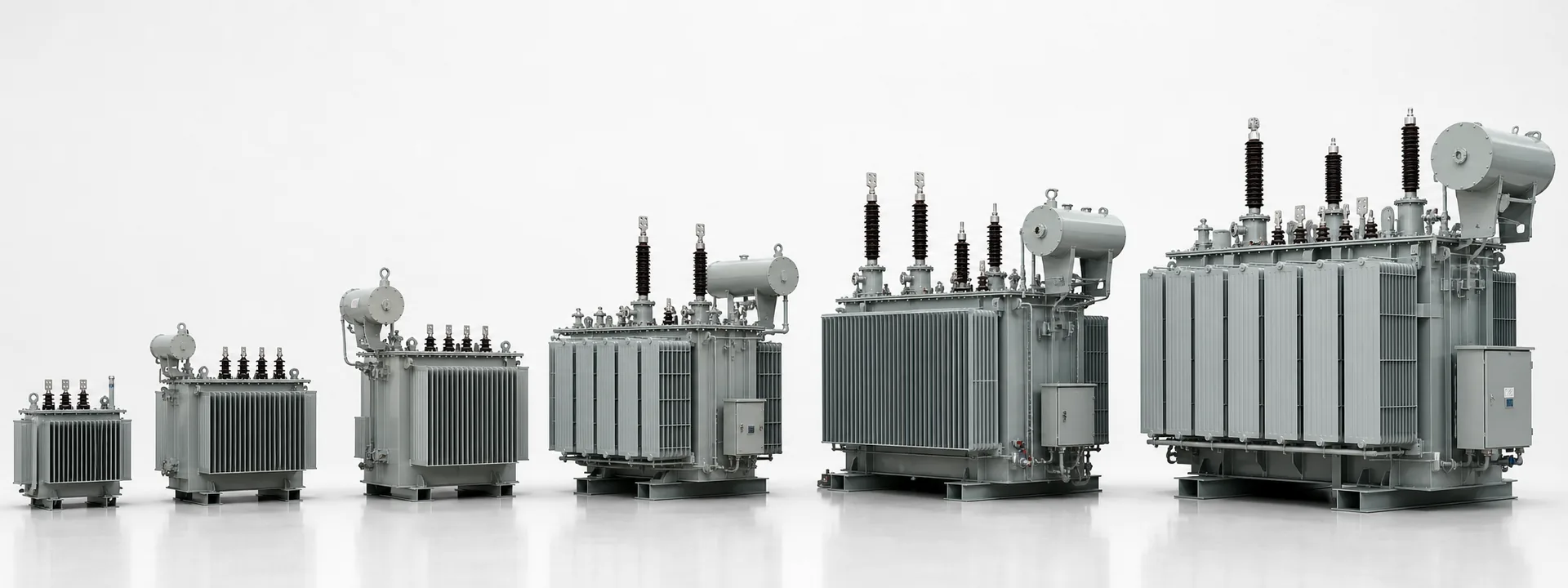
ONAN relies on natural oil convection and natural air movement — no fans, no moving parts. ONAF adds fans to the radiators, increasing heat dissipation and allowing a higher rated output from the same tank. The right choice depends on ambient temperature, load profile, and site constraints.
IEC 60076-2 defines transformer cooling using a four-letter code. Each letter position has a specific meaning:
| Position | Meaning | Letter options |
|---|---|---|
| 1st | Internal coolant type | O = mineral oil · L = low-flammability liquid · K = fire-resistant synthetic · G = gas |
| 2nd | Internal coolant circulation | N = natural convection · F = forced circulation (pump) · D = directed forced (oil guided to windings) |
| 3rd | External coolant type | A = air · W = water |
| 4th | External coolant circulation | N = natural (no fans) · F = forced (fans or pumps) |
Example decodes: ONAN = oil natural / air natural (no fans). ONAF = oil natural / air forced (fans on radiators). OFAF = oil forced / air forced (pump + fans). ODAF = oil directed forced / air forced (oil pumped directly to windings).
In ONAN cooling, heat generated in the windings and core is transferred to the surrounding oil. The hot oil rises by buoyancy, circulates through external radiators, cools by natural airflow, and returns to the tank. No fans, no pumps.
Silent operation
No fans means zero mechanical noise. Preferred near residential areas, hospitals, or noise-sensitive sites.
No auxiliary power
Cooling is entirely passive — no fan power supply required, no fan failure modes.
Lowest maintenance
No moving parts in the cooling system. Service is limited to oil condition monitoring.
Proven reliability
ONAN is the most widely deployed cooling class for distribution transformers globally.
ONAF transformers use fans mounted on the radiators to force airflow across the cooling surfaces. This increases the rate of heat removal from the oil, allowing the same tank and active part to operate at a higher rated output — or to maintain its full rating at higher ambient temperatures.
Higher kVA / MVA rating
A transformer rated ONAN/ONAF may carry, for example, 100% at ONAN and 125% at ONAF — the fans add thermal headroom.
More compact footprint
For a given kVA rating, an ONAF unit can use a smaller tank than ONAN — useful in constrained substations.
Fan noise
Fans produce mechanical and aerodynamic noise. Noise levels must be checked against site requirements.
Fan maintenance
Fan motors and bearings require periodic inspection and eventual replacement — typically every 5–10 years.
IEC 60076-2 rates transformers at a maximum ambient temperature of 40°C and an annual average of 20°C. Many sites in the Middle East, sub-Saharan Africa, and Southeast Asia exceed these limits regularly, with ambient temperatures reaching 45–50°C during summer months.
At 50°C ambient, an ONAN transformer designed for 40°C must be derated (typically by 1–1.5% per °C above the rated ambient, depending on design). The alternatives are: (1) oversize the ONAN unit, (2) specify ONAF to maintain rated output via forced cooling, or (3) specify a transformer rated explicitly for the higher ambient. Always state maximum ambient temperature and annual average temperature in your specification.
| Mode | Coolant | Circulation | Fans | Typical range | Relative cost | Noise | Maintenance |
|---|---|---|---|---|---|---|---|
| ONAN | Mineral oil | Natural | No | ≤ 10 MVA | Lowest | Silent | Lowest — oil checks only |
| ONAF | Mineral oil | Natural | Yes | 1–63 MVA | Low–mid | Low–mid | Fan motor/bearing service |
| OFAF | Mineral oil | Forced (pump) | Yes | 10–300 MVA | Higher | Medium | Fans + oil pump service |
| AN / AF | Air (dry-type) | Natural / forced | Optional | ≤ 2.5 MVA typical | Mid–high | Low–medium | Winding inspection; no oil |
AN = dry-type natural air cooling (no oil). AF = dry-type with forced air (fans). IEC 60726 governs dry-type transformers.
Tell us your site ambient temperature, altitude, and rating — we'll recommend the right cooling class for your project.
Request a Quote Technical QuestionTransformer Academy
Start with the plain-English basics, then move into RFQ, testing, standards, cooling, and calculator tools.
ONAN or ONAF — We Supply Both
Include your site conditions in the RFQ and we'll configure the right cooling class for your project environment.