Oil-Immersed or Dry-Type — We Supply Both
Send Your Installation Details
Tell us whether the transformer will be indoor or outdoor, the required rating, and your destination country. We'll recommend the right type and provide a quote.
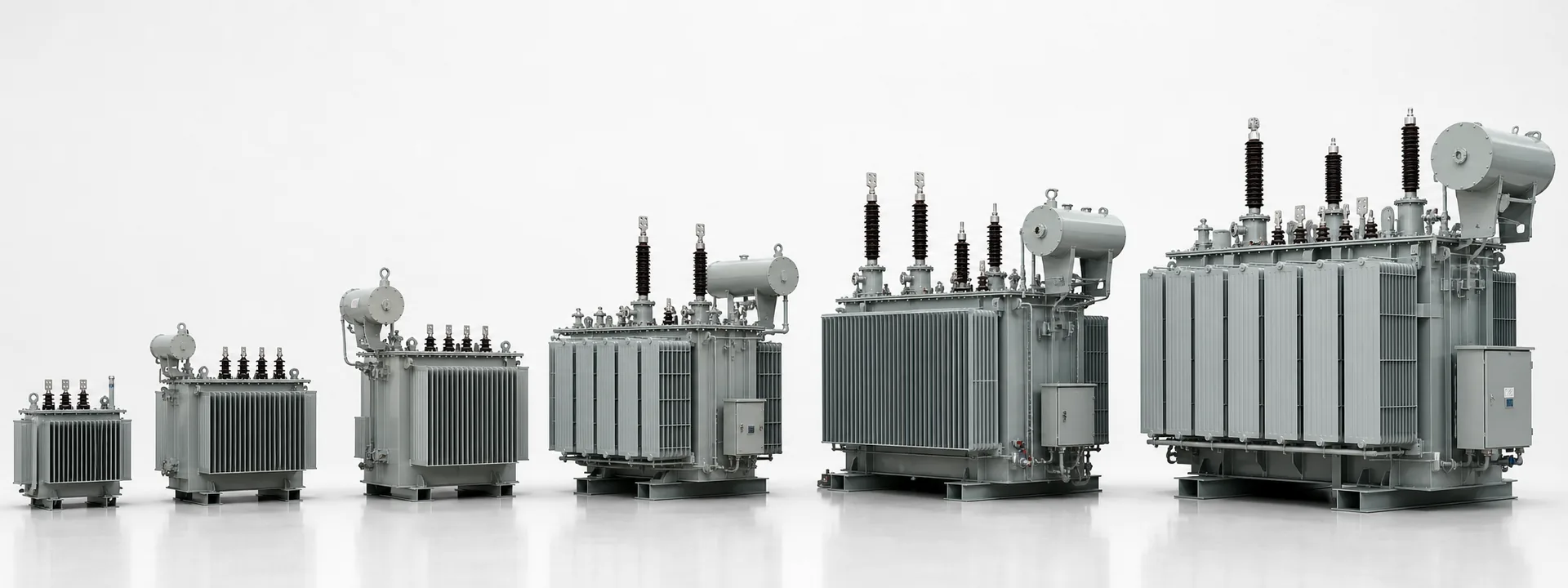
Selection Guide
Oil-immersed transformers dominate outdoor utility and industrial applications. Dry-type units are preferred indoors where oil spill or fire risk is a concern. The decision depends on installation environment, fire safety requirements, capacity, and total cost of ownership.
| Use case | Recommended type |
|---|---|
| Outdoor substation, utility grid, rural distribution | Oil-immersed (ONAN/ONAF) |
| Industrial plant — outdoor, high kVA, cost-sensitive | Oil-immersed |
| Indoor commercial building — main incomer or distribution board | Dry-type (cast resin) |
| High-rise building — transformer room inside structure | Dry-type — no oil spill risk on upper floors |
| Data centre, hospital, shopping centre | Dry-type — fire safety and indoor environment |
| Offshore platform or marine vessel | Cast-resin dry-type — salt air and fire safety |
| Mining or heavy industry — outdoor | Oil-immersed, ONAN or ONAF |
| Renewables — wind farm collector substation | Oil-immersed (outdoor); dry-type in nacelle or on-tower |
| Large power transformer (10 MVA+) | Oil-immersed — dry-type rarely used above ~3.5 MVA |
| Parameter | Oil-Immersed | Dry-Type (Cast Resin) |
|---|---|---|
| Installation | Outdoor preferred; indoor with oil containment pit possible | Indoor preferred; outdoor with enclosure (IP54+) possible |
| Fire safety | Mineral oil is combustible — requires oil containment and fire barriers in some jurisdictions | No oil — significantly lower fire risk; F1 class (self-extinguishing resin) available |
| Maintenance | Periodic oil sampling and dielectric testing; oil filtration or replacement over lifetime | Visual inspection and cleaning; no oil system; insulation condition monitoring |
| Capacity range (typical) | 50 kVA to 300 MVA and above | 50 kVA to approximately 3,500 kVA (larger units available but uncommon) |
| Initial cost | Lower for equivalent rating — oil insulation is cost-effective at larger kVA | Higher initial cost — cast-resin manufacturing is more expensive |
| Noise level | Lower noise typical (oil dampens vibration); fans add noise in ONAF | Similar or slightly higher core vibration; no oil damping |
| Cooling method | ONAN, ONAF, OFAF, ODAF (IEC codes) | AN (natural air), AF (forced air fan cooling) |
| Suitable environments | Outdoor; dry/moderate indoor; industrial; utility grid | Indoor; high humidity (with IP enclosure); corrosive atmosphere; fire risk areas |
| Governing standard | IEC 60076 (oil-immersed power transformers) | IEC 60076-11 / IEC 60726 (dry-type transformers) |
| Typical lifespan | 25–40 years with proper oil maintenance | 20–30 years; no oil degradation but resin can absorb moisture if exposed |
| Typical applications | Utility distribution, industrial plant, substations, rural networks | Commercial buildings, hospitals, data centres, marine/offshore, tunnels |
Initial Capex vs 25-Year Lifecycle TCO
While oil-immersed units generally have lower initial purchase cost, dry-type units eliminate fire suppression and oil containment pits. To compare procurement budgets across configurations, check our transformer pricing estimator. To calculate annual no-load/load losses and total capitalized energy cost, run your specs through the transformer losses calculation tool.
Oil-immersed transformers are the practical choice when one or more of the following applies:
Dry-type transformers are the right choice when:
Dry-type — fire safety and indoor environment
Data centres place transformers close to IT loads inside the building. The combination of high-value equipment, continuous operation, and strict fire codes makes dry-type the standard choice. Cast-resin insulation is self-extinguishing. No oil means no spill, no containment pit, and no oil sampling programme.
Dry-type — no oil spill risk on upper floors
Placing an oil-immersed transformer on the 20th floor of a building is a serious fire hazard and typically prohibited by building codes. Dry-type units with cast-resin windings are installed in electrical plant rooms on upper floors. Routine maintenance is limited to visual inspection and occasional cleaning.
Oil-immersed — high kVA, outdoor, cost-effective
A manufacturing or mining operation with a 2–20 MVA outdoor substation is a classic oil-immersed application. The transformer is outdoors with an oil containment pit. Regular oil condition monitoring is straightforward. The cost difference compared to dry-type at this rating is significant.
Oil-immersed — large MVA, utility-grade
Transmission and distribution substations at 33 kV, 66 kV, 110 kV, and above are served almost exclusively by oil-immersed power transformers. The capacity range (10–300 MVA) is beyond what dry-type technology practically delivers. Utilities have established oil maintenance and testing programmes.
Cast-resin dry-type — salt air and fire safety
Offshore oil platforms and marine vessels have two constraints that point to dry-type: fire safety regulations prohibit large volumes of combustible oil inside the structure, and the salt-laden humid atmosphere requires a sealed, corrosion-resistant insulation system. Cast-resin dry-type with high-IP enclosures is standard.
Tell us your installation environment, rating, and country — we'll recommend oil-immersed or dry-type and configure accordingly.
Request a Quote Ask a Technical QuestionOil-Immersed
Dry-Type (Cast Resin)
Transformer Academy
Start with the plain-English basics, then move into RFQ, testing, standards, cooling, and calculator tools.
Oil-Immersed or Dry-Type — We Supply Both
Tell us whether the transformer will be indoor or outdoor, the required rating, and your destination country. We'll recommend the right type and provide a quote.